Field NotesOhio
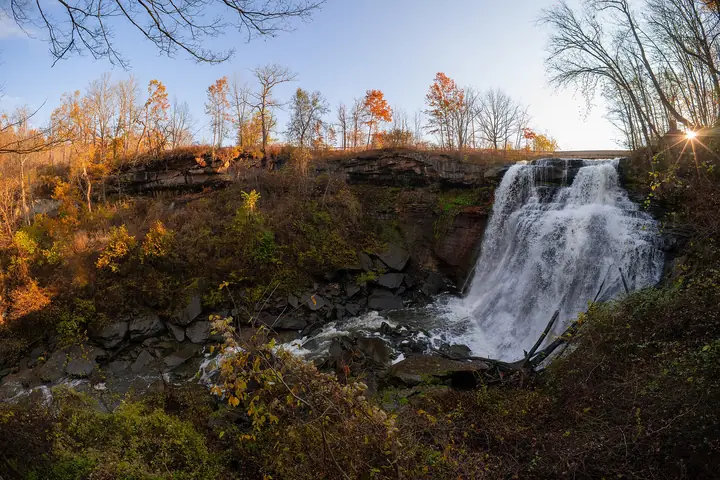
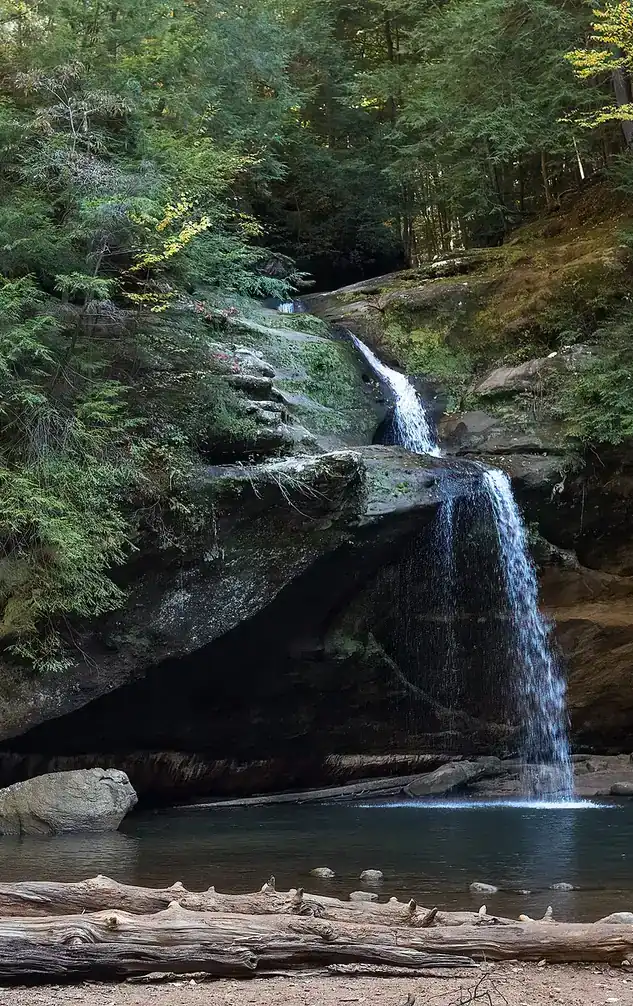
Upper Falls in the Old Man's Cave gorge, Hocking Hills, with visitors on the rocks

An independent field guide · 365 places

The field guide to outdoor Ohio

Parks and forests, ancient mounds, caves, waterfalls and back roads, with the story behind each place and where to eat and fuel up nearby.
Popular:
  • 117parks & forests
  • 64ancient mounds
  • 34waterfalls
  • 40historic sites
  • 33road trips

Old Man's Cave, Hocking Hills · Photo: Rhododendrites, CC BY-SA 4.0

Explore by type

What are you in the mood for?
See every place →

Plan a trip

Explore Ohio

One map for every park, mound, historic site, beach, cave, waterfall and oddity in the app.

Lake ErieWest Virginia36 places368 places813 places135 places523 places2321 places2124 places2416 places1613 places134 places418 places182 places217 places1710 places1014 places142 places27 places76 places613 places133 places34 places414 places143 places3Harrison Lake State Park2 places22 places22 places26 places64 places4

Tap a symbol for a preview, or search for a place. Open the key to show or hide categories.

Parks, forests & wildlife areas

Find a park

117 parks in 7 regions

Schoenbrunn Village

New Philadelphia · Tuscarawas County · Eastern Ohio
Ohio's first Christian settlement, rebuilt log by log
Ohio's first Christian settlementOhio History Connection

A reconstructed Moravian and Delaware mission village, the first Christian town in Ohio.

Founded
Spring 1772 by the Moravian missionary David Zeisberger and Delaware (Lenape) families
Name
Schoenbrunn, German for beautiful spring
Ohio firsts
Settlement, church, schoolhouse and code of laws
Population
300 to 400 people in about 60 dwellings
Abandoned
1777, as the Revolutionary War spread
Today
16 reconstructed log structures, the church, gardens and the original cemetery

The story

In the spring of 1772 the Moravian missionary David Zeisberger came up the Tuscarawas River with five Christian Delaware families and founded a village he called Schoenbrunn, 'beautiful spring.' The mission's purpose was to convert the Delaware to Christianity, and Ohio Magazine describes the residents as being assimilated to it. The village grew to about sixty dwellings and more than 300 people, who built a church, a schoolhouse where boys and girls were taught and Ohio's first code of laws. It sat in a rare pocket of neutrality in a region tense with the coming Revolution.

That neutrality did not last. Pressure from settlers and from British-aligned Native nations forced the village to be abandoned in 1777, and in 1781 the Moravian Indians were driven west. In 1782 a group that returned to gather their crops was killed at Gnadenhutten. Moravian records helped researchers find the site of Schoenbrunn in the twentieth century, archaeology confirmed it, and in the 1920s and 1930s log buildings were rebuilt on their original locations. Today the site has 16 reconstructed structures, the church, gardens and the original cemetery, with a visitor center and introductory video.

Related sites

Visiting information you can trust

Check before driving — this site is seasonal, approximate, privately run, or otherwise uncertain. Confirm hours and access with the official source above.
Content last reviewed
September 2026 — this is when Field Notes Ohio's content was last checked, not a live status.
Primary official source
Official page
Location confidence
Verified entrance or visitor center
Schoenbrunn Village (Ohio History Connection coordinates)
Seasonal access
Memorial Day through Labor Day: Wednesday to Saturday 10 a.m. to 5 p.m., Sunday noon to 5 p.m. September and October: weekends only.
Check current conditions
Official conditions or closures
Reservations or tickets
Tickets or admission info

Prices, hours, closures, campsite availability and trail conditions shown elsewhere on this page are not live — always confirm with the official source before you go.

The Town That Wrote Ohio's First Laws

On the Tuscarawas River, in the middle of the Revolution, Delaware families and German missionaries built a town with a church, a school and a written code of laws. It was the first of its kind in the Ohio country, and for five years it worked.

Then the war reached it. The people of Schoenbrunn left their cabins in 1777, and the village they had built was gone.

Behind the legend

The founding in 1772, the church, the schoolhouse, the law code and the abandonment in 1777 are from the Ohio History Connection. Counts differ across sources: the reconstruction has 16, 17, 18 or 20 buildings depending on who counts, and the population is given as 300 or 400. The tragedy that followed for the region's Moravian Christians is told at Gnadenhutten.

If you go

Walk the village lanes, step into the schoolhouse and church and read about the law code in the museum.

Visiting

Status
Open seasonally
Managed by
Ohio History Connection
Hours
Memorial Day through Labor Day: Wednesday to Saturday 10 a.m. to 5 p.m., Sunday noon to 5 p.m. September and October: weekends only.
Admission
Adults $8, seniors $6, children 7 to 17 $4; members and children 6 and under free.
Please note
Allow an hour or more. Confirm the fall weekend hours.
Address
1984 E High Ave, New Philadelphia, OH 44663
Official information →DirectionsFind trails nearby on AllTrails →

Hours and prices change. Confirm with the site before you go.

Parks nearby

Leesville Lake
About 11 miles · A muskie lake with marina camping.
Open
Tappan Lake Park
About 17 miles · A big lake park with camping and cabins.
Open

Buckeye Trail

Massillon Section
54 miles · on or near the Buckeye Trail
Open

Details last checked 2026-09-22. Confirm hours and prices before you go.

Know a place that belongs here, or spotted something out of date? Email hello@fieldnotesohio.com.