Field NotesOhio
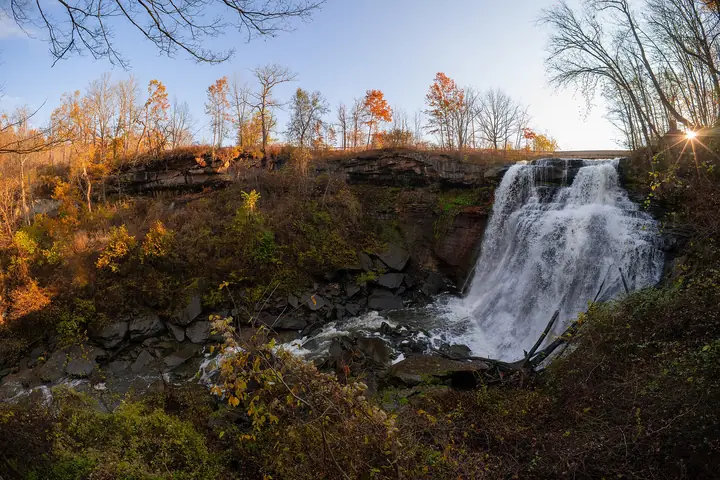
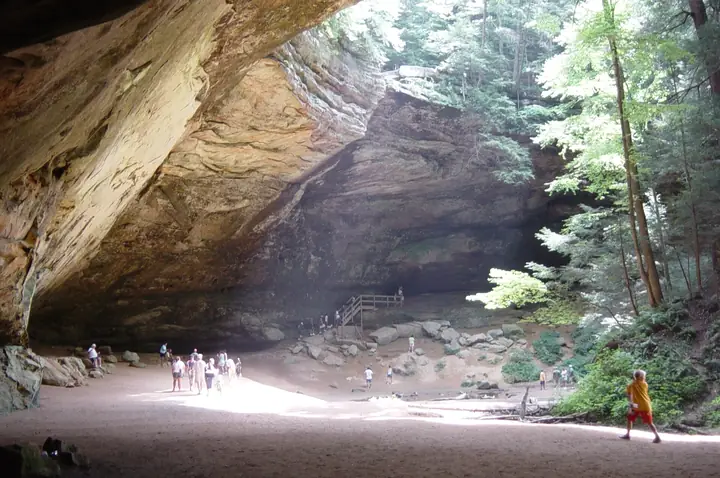
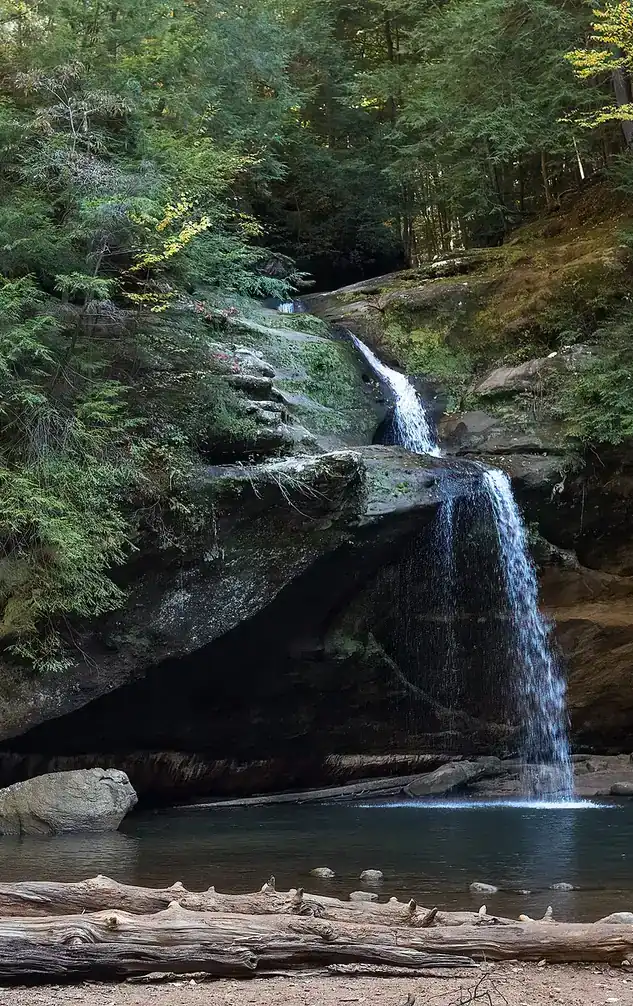
Upper Falls in the Old Man's Cave gorge, Hocking Hills, with visitors on the rocks

An independent field guide · 365 places

The field guide to outdoor Ohio

Parks and forests, ancient mounds, caves, waterfalls and back roads, with the story behind each place and where to eat and fuel up nearby.
Popular:
  • 117parks & forests
  • 64ancient mounds
  • 34waterfalls
  • 40historic sites
  • 33road trips

Old Man's Cave, Hocking Hills · Photo: Rhododendrites, CC BY-SA 4.0

Explore by type

What are you in the mood for?
See every place →

Plan a trip

Explore Ohio

One map for every park, mound, historic site, beach, cave, waterfall and oddity in the app.

Lake ErieWest Virginia36 places368 places813 places135 places523 places2321 places2124 places2416 places1613 places134 places418 places182 places217 places1710 places1014 places142 places27 places76 places613 places133 places34 places414 places143 places3Harrison Lake State Park2 places22 places22 places26 places64 places4

Tap a symbol for a preview, or search for a place. Open the key to show or hide categories.

Parks, forests & wildlife areas

Find a park

117 parks in 7 regions
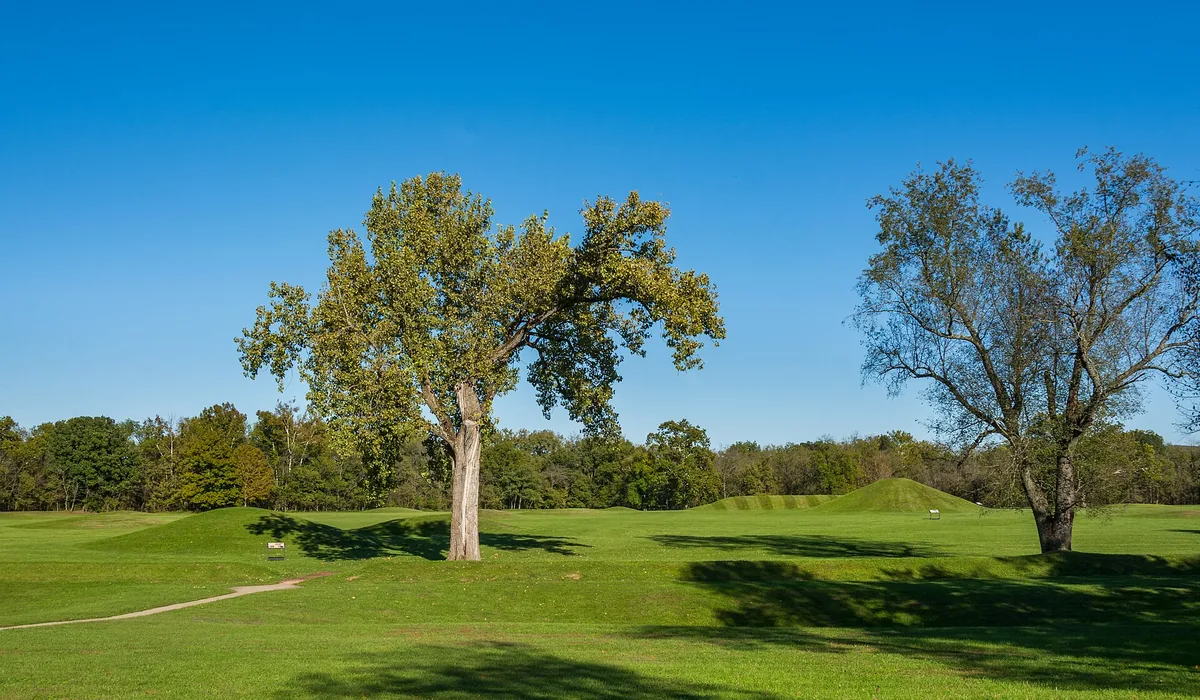
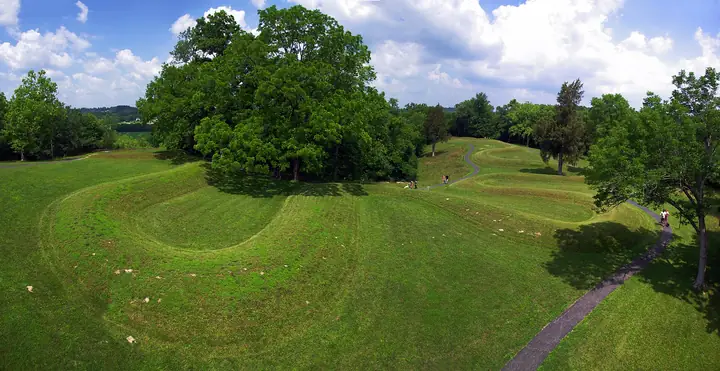
Burial mounds and open lawn at the Mound City Group

Mound City Group

Chillicothe · Ross County · Southern Ohio
The only fully restored Hopewell earthwork
Hopewell Culture National Historical ParkUNESCO World Heritage Site (2023)National Historic Landmark

Mound City Group · Photo: Ɱ, CC BY-SA 4.0

A city of mounds along the Scioto, buried under an army camp and then put back.

Mounds
At least 23 mounds inside a low earthen wall, ringed by eight borrow pits
Each mound
Covers a burned charnel house; the Hopewell cremated their dead
Camp Sherman
Built over the site in 1917, destroying many mounds
Restored
1920 to 1921; the mounds were rebuilt
National monument
1923; became a national historical park in 1992
Visitor center
16062 State Route 104, with a museum of Hopewell artifacts

The story

Squier and Davis named the site Mound City for its unusual concentration of mounds, at least 23, enclosed by a low earthen wall. Each mound covers a charnel house: the Hopewell burned their dead and the building that held them and raised a mound over the ashes, placing copper figures, mica, shells and pipes inside. Mound 7, the largest, is sometimes called Death Mask Mound.

In 1917, during World War I, the site was covered by part of Camp Sherman, an army training camp, and many mounds were destroyed. The Ohio Historical and Archaeological Society excavated and restored the mounds in 1920 and 1921, and in 1923 President Harding made it Mound City Group National Monument. In 1992 it became Hopewell Culture National Historical Park, and in 2023 it was inscribed by UNESCO. It is the only Hopewell earthwork that has been fully restored. Just to the south, under State Route 104 and the grounds of the Chillicothe Correctional Institution, lie the remains of the Shriver Circle, one of the largest Hopewell circles in Ohio, graded flat for Camp Sherman's parade ground in World War I.

Related sites

Visiting information you can trust

Content last reviewed
September 2026 — this is when Field Notes Ohio's content was last checked, not a live status.
Primary official source
Official page
Location confidence
Verified property location
Located from the site's street address
Check current conditions
Official conditions or closures
Reservations or tickets
Tickets or admission info

Prices, hours, closures, campsite availability and trail conditions shown elsewhere on this page are not live — always confirm with the official source before you go.

The Army Camp Built on the Mounds

In 1917 the army needed a place to train soldiers, and the flat, fertile Scioto Valley near Chillicothe was chosen for Camp Sherman. Barracks and drill fields covered Mound City, and many of the mounds were flattened. When the war ended and the camp came down, the mounds were partly rebuilt.

The same camp fired artillery in the hills nearby, on what is now Scioto Trail State Forest, where you can camp today on a former impact zone.

Behind the legend

This is documented in the National Park Service's own history: Camp Sherman covered the site and many mounds were destroyed, then the Ohio Historical and Archaeological Society excavated and restored it in 1920 and 1921. That restoration is why the visitor sees 23 low grassy mounds today rather than an empty field. Estimates of the count differ, since one source says there were 24 mounds and 22 remain.

The Hopewell people who built it lived here between about 200 BCE and 500 CE.

If you go

Walk the mounds trail and the perimeter trail, and see the museum. Then look for the Scioto Trail State Forest story about the artillery range.

Visiting

Status
Open daily
Managed by
National Park Service
Hours
Grounds open dawn to dusk. The visitor center is typically open 9 a.m. to 4 p.m. daily, closed Thanksgiving, Christmas and New Year's Day.
Admission
Free
Please note
Do not walk on the mounds.
Address
16062 State Route 104, Chillicothe, OH 45601
Official information →Directions

Parks nearby

Hopewell Culture National Historical Park
About 0 miles · The national park that protects this site.
Open
Great Seal State Park
About 3 miles · The hills that inspired Ohio's state seal, just north of Chillicothe.
Open
Scioto Trail State Park
About 10 miles · State park and forest with a CCC lake and a hermit's monument.
Open
Pike Lake State Park
About 19 miles · Camping and cabins in the hills of Pike County.
Open
Paint Creek State Park
About 22 miles · A big lake park with limestone bluffs.
Open

Details last checked 2026-09-22. Confirm hours and prices before you go.

Know a place that belongs here, or spotted something out of date? Email hello@fieldnotesohio.com.